12 min de lecture
18 févr. 2026
How Palmyra Could Support MrBeast’s Feastables at Global Scale
How Palmyra Could Power the Next Phase of Feastables’ Growth
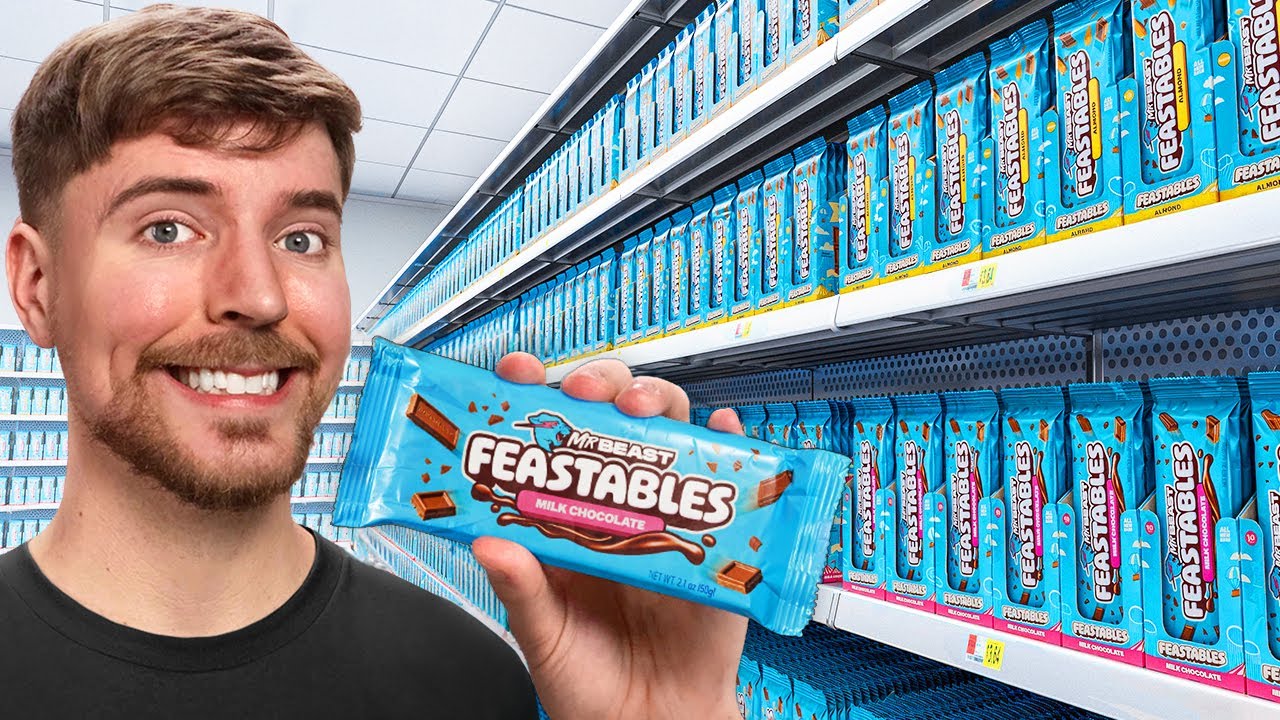
When MrBeast, launched Feastables, the brand immediately stood out. It was not just another chocolate label entering a saturated consumer market. It was a creator-driven product designed for a digital-native audience, built on transparency, strong branding, and massive online reach. From a marketing standpoint, Feastables demonstrated how modern consumer brands can scale rapidly when backed by audience trust and social distribution.
However, scaling a chocolate brand in 2026 is no longer purely a brand-building exercise. It is increasingly a supply chain and compliance challenge. Cocoa sits at the center of one of the most scrutinized agricultural ecosystems in the world. Between deforestation risks, labor concerns, price volatility, and tightening international regulation such as the EU Deforestation Regulation, chocolate companies operate within a landscape where proof of responsible sourcing is becoming structurally mandatory.
For a brand built on trust, that upstream infrastructure matters.
The New Reality of Cocoa Compliance
Global regulators are placing greater emphasis on due diligence and traceability. Under the EU Deforestation Regulation, companies must demonstrate that cocoa entering the European market has not contributed to deforestation after December 2020. This requires traceability down to specific plots of land and substantiated due diligence statements, not simply high-level supplier declarations.
At the same time, scrutiny from NGOs and consumers around child labor and ethical sourcing remains significant. Modern chocolate brands must navigate a system in which transparency is expected and documentation must withstand regulatory review. As brands expand geographically, compliance obligations increase in complexity.
A fast-growing brand such as Feastables, particularly if expanding in Europe or other compliance-heavy markets, must ensure that its sourcing architecture can support detailed verification. Success is no longer measured only by retail velocity or influencer reach. It is also defined by the integrity of the data behind the supply chain.
The Structural Challenge Within Cocoa Trade
Cocoa supply chains are complex by nature. Smallholder farmers harvest beans, which are then sold to intermediaries, aggregated by cooperatives, exported through licensed buyers, and processed before becoming ingredients for manufacturers. Along this journey, batches are frequently merged, split, fermented, transported, and stored. Operational efficiency often depends on aggregation.
Aggregation improves logistics, but it can weaken identity unless systems are deliberately designed to preserve it. Once cocoa from multiple farms is combined without structured batch logic, continuity becomes difficult to reconstruct later. Many traceability systems attempt to assemble origin data at the export stage, long after transformation events have already occurred.
For brands that scale rapidly and operate across multiple jurisdictions, this late-stage reconstruction introduces risk. When regulatory scrutiny intensifies or public attention focuses on sourcing practices, documentation built from summaries may not provide the granularity required.
Infrastructure as a Competitive Advantage
This is where infrastructure-level traceability becomes strategically relevant.
Palmyra Pro is designed to preserve identity from origin through transformation and trade. Instead of relying primarily on static reports, the system captures farmer registration data, plot-level information, batch creation, splitting and merging events, custody transfers, and compliance checkpoints as part of daily workflow. Identity moves with the commodity rather than being reassembled after shipment.
For a brand such as Feastables, infrastructure of this type could provide several operational advantages. First, regulatory readiness becomes proactive rather than reactive. If entering markets governed by EUDR or similar frameworks, verifiable origin continuity is already embedded within sourcing processes. Second, procurement resilience improves because leadership gains clearer visibility into volumes, sources, and transformation stages. Third, brand integrity strengthens when marketing claims can be backed by structured proof rather than generalized certification language.
This is not about adding complexity to supply chains. It is about reducing fragility.
Scaling Responsibly in the Creator Economy
Creator-led brands operate differently from legacy consumer packaged goods companies. Demand can accelerate suddenly based on viral campaigns or product releases. Distribution expands across borders quickly. Partnerships evolve in months rather than years. This pace increases the pressure placed on upstream sourcing systems.
Without structured continuity, rapid growth can strain supply chains and increase exposure to compliance failures. Infrastructure that captures data at origin and maintains structural memory across transactions enables scaling without sacrificing oversight.
In this sense, traceability is not a marketing tool. It is operational architecture that supports sustainable expansion. For chocolate brands operating in today’s regulatory environment, it becomes part of risk management strategy.
Growth driven by visibility is powerful. Growth supported by infrastructure is durable.
And in commodities like cocoa, durability ultimately determines which brands lead — and which struggle when the system is tested.
