10 min read
Cocoa at a Crossroads: Regulation, Climate, and the End of Anonymous Sourcing
Cocoa at a Turning Point
Cocoa has always been more than a commodity. It is a cultural good, a sensory product, and the foundation of a global industry worth tens of billions of dollars. Yet behind every chocolate bar sits one of the most structurally fragile agricultural supply chains in the world. Millions of smallholder farmers produce over 70 percent of global cocoa, while value, visibility, and trust concentrate further downstream.
This imbalance is no longer sustainable. The cocoa industry is entering a decisive decade, shaped by regulation, climate pressure, and a fundamental shift in how buyers and consumers define quality.
An Industry Built on Blind Spots
For decades, cocoa sourcing relied on aggregation. Beans moved through layers of intermediaries before reaching grinders, manufacturers, and brands. This model maximized volume efficiency but sacrificed transparency. Origin data became blurred, farm-level practices were rarely verified, and producers remained largely invisible to the end market.
Today, that opacity is becoming a liability.
European regulations such as the EUDR are turning traceability from a competitive advantage into a baseline requirement. Buyers now need to demonstrate deforestation-free sourcing, geolocation at farm level, and auditable supply chains. At the same time, premium markets in Europe and East Asia are demanding something more subtle but equally powerful: credibility.
Not just where cocoa comes from, but how it is produced, by whom, and under what conditions.
Climate, Quality, and the Fragile Middle
Climate volatility is tightening supply. Irregular rainfall, rising temperatures, and soil degradation are reducing yields across West Africa and parts of Latin America. This is not only a volume problem. It is a quality problem.
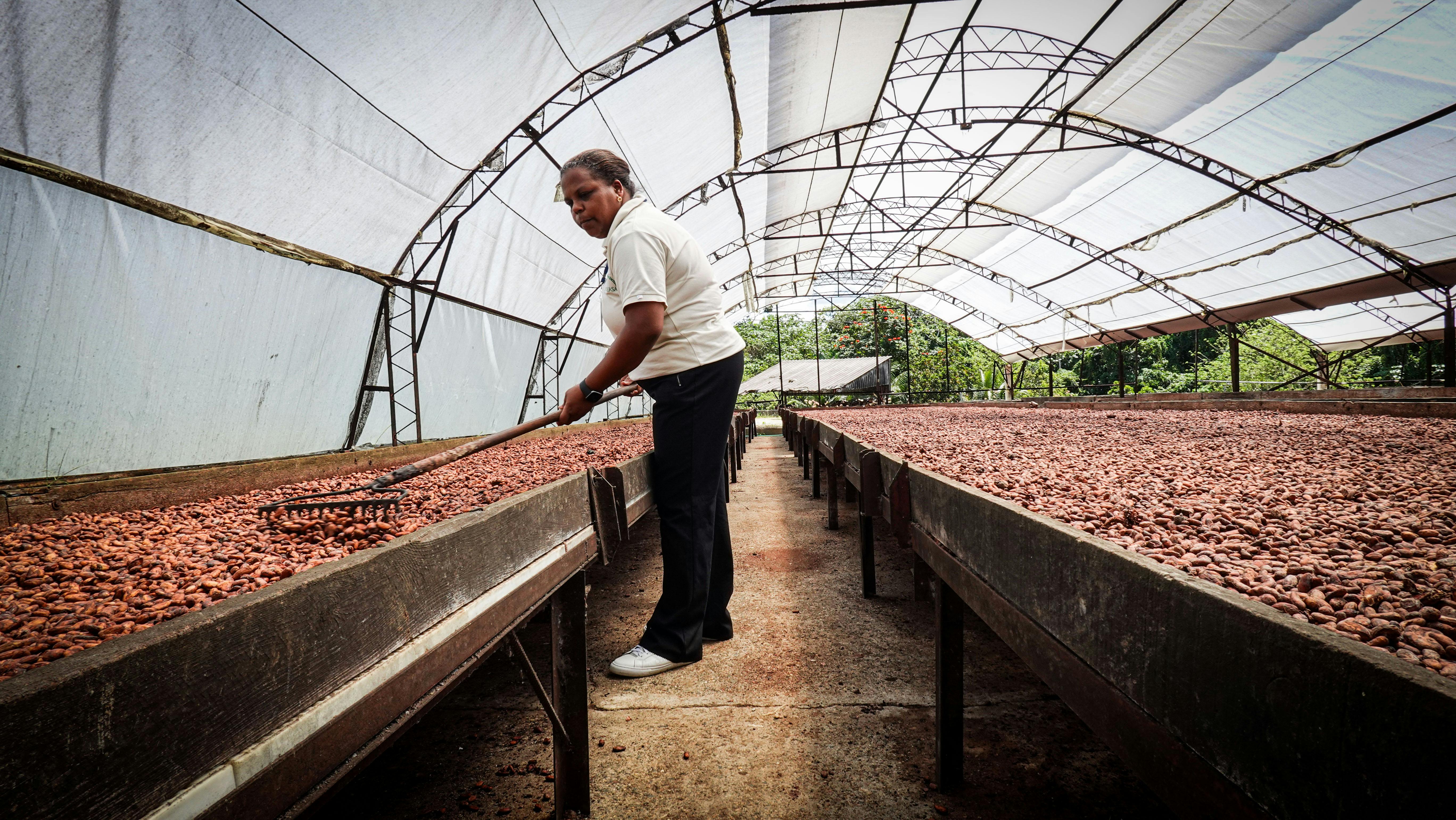
Fermentation timing, drying conditions, and storage practices determine flavor potential, yet these processes are often under-supported at origin. When farmers lack feedback loops and access to differentiated markets, quality incentives disappear. Cocoa becomes interchangeable. Price becomes the only signal.
As margins compress, the system strains in the middle. Cooperatives struggle to meet buyer documentation requirements. Exporters face rising compliance costs. Brands face reputational risk. Everyone absorbs friction created by missing data and disconnected systems.
From Raw Material to Verifiable Asset
The future of cocoa lies in re-framing it from an anonymous raw material into a verifiable asset.
Traceability is the foundation. Farm-level mapping, batch-level tracking, and chain-of-custody records create continuity from field to factory. But data alone is not enough. The industry needs structured ways to translate that data into something usable across markets.
This is where labeling, certification alignment, and digital documentation converge. A single batch of cocoa may serve multiple destinations, each with different compliance and storytelling requirements. The ability to segment, label, and present that same cocoa differently depending on buyer context is becoming essential.
In practical terms, cocoa is no longer just produced. It is curated.
Trust as the New Currency
In premium chocolate, trust now carries economic weight. Consumers pay more when origin stories are credible and verifiable. Buyers commit long-term contracts when supply chains are resilient and auditable. Financial institutions unlock better terms when risk is measurable.
This shift transforms relationships at origin. Farmers become identifiable producers. Cooperatives evolve into data-enabled supply partners. Exporters transition from logistics providers into trust brokers.
The result is not only compliance readiness, but optionality. Cocoa that can prove its origin, practices, and impact can access more markets, negotiate better pricing, and weather volatility with greater resilience.
A New Operating Layer for Cocoa
The cocoa industry does not need more promises. It needs infrastructure that works quietly in the background, reducing friction rather than adding complexity.
Digital traceability platforms are emerging as this new operating layer. They connect farm data, cooperative workflows, compliance logic, and buyer-facing documentation into a single system. When done properly, they do not replace existing actors. They align them.
The strongest models respect how cocoa actually moves through the world. They adapt to informal realities on the ground while meeting formal requirements at the point of sale. They are modular, scalable, and designed to grow with both producers and buyers.
Looking Ahead
The next era of cocoa will be defined less by volume and more by verification. Not every bean will be premium, but every serious supply chain will be accountable.
Those who invest early in traceability, labeling, and trust-building infrastructure will not only meet regulatory demands. They will shape how cocoa is valued, traded, and understood globally.
At Palmyra, this transition is seen not as a disruption, but as an opportunity to realign incentives across the ecosystem. For producers to be seen. For buyers to source with confidence. And for cocoa itself to reclaim its full value in the global market.
